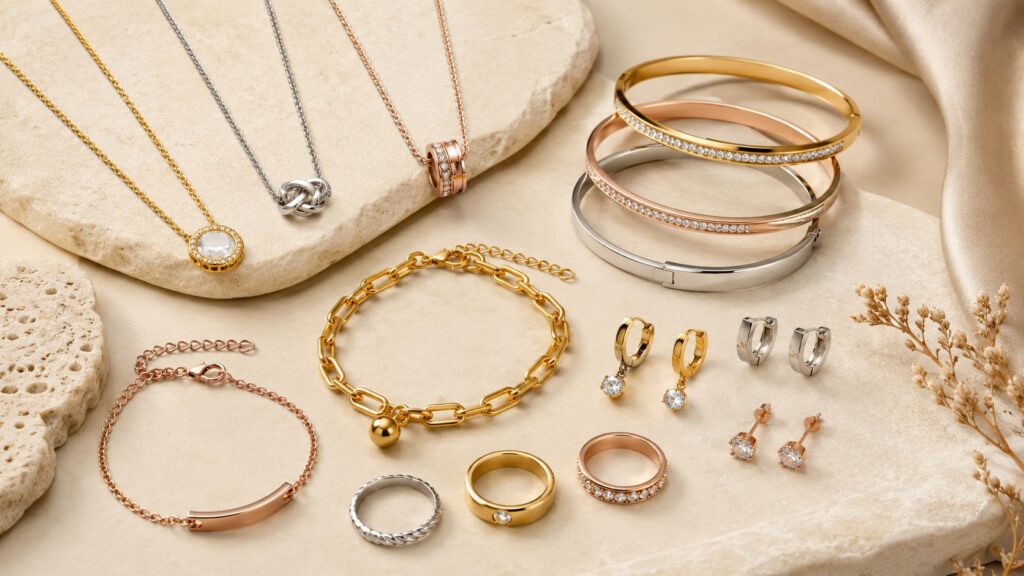
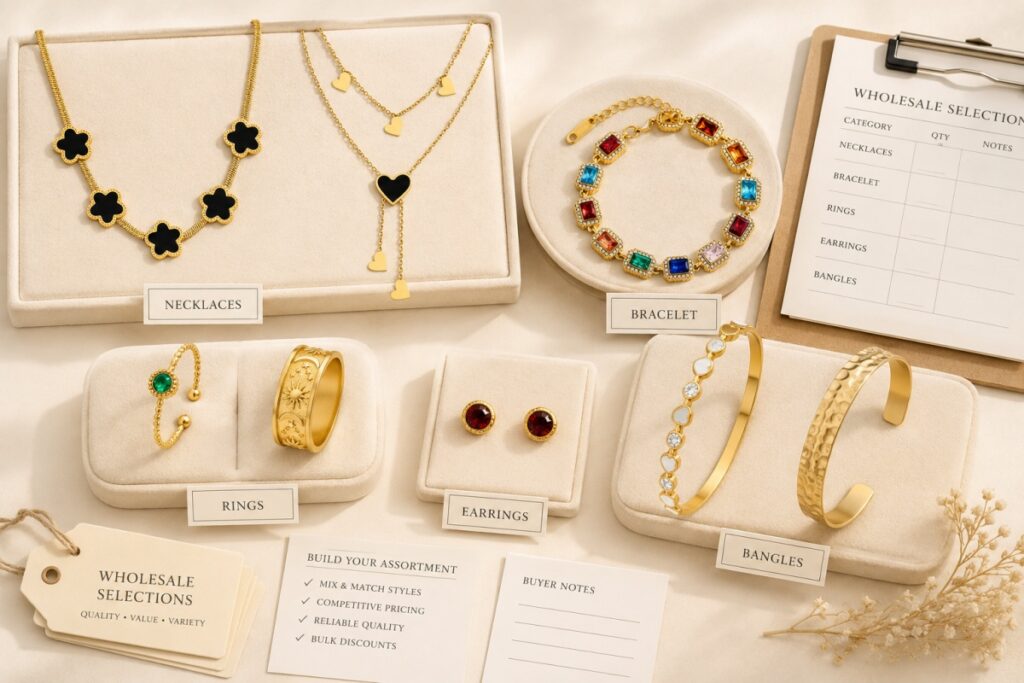
Learning how to evaluate stainless steel jewelry samples is an important step before confirming a larger wholesale or custom order. A sample allows buyers to review the actual material, plating color, dimensions, product structure, stone setting, clasp function, wearing comfort and packaging rather than relying only on product photos.
For jewelry brands, wholesalers, boutiques and online retailers, a structured sample review can reduce misunderstandings, identify necessary adjustments and provide a clear reference for bulk production or repeat purchasing.
This guide explains the main points buyers should check when reviewing stainless steel jewelry samples.
Why Jewelry Sample Inspection Matters
A jewelry sample is not only a visual reference. It is also a practical tool for confirming whether a product is suitable for your target market, price range and collection positioning.
Sample evaluation can help buyers:
- Confirm the actual product appearance and color
- Check dimensions, weight and wearing comfort
- Review clasps, chains, hinges and connecting parts
- Evaluate plating, polishing and surface finish
- Inspect stones and decorative components
- Test packaging suitability
- Record approved details before a bulk order
Small differences that appear unimportant in photos may become more noticeable when the product is handled or worn. For this reason, sample inspection should be completed before approving a larger order whenever possible.
How to Evaluate Stainless Steel Jewelry Samples Step by Step
1. Confirm the Sample Information
Before evaluating the physical product, confirm that the sample matches the product you requested.
Record the following information:
- Supplier name
- Product name or SKU
- Sample quantity
- Requested material
- Plating color
- Requested dimensions
- Packaging requirements
This prevents confusion when several similar samples, colors or product variations are being reviewed at the same time.
2. Check the Material and Product Structure
Ask the supplier to confirm the stainless steel grade and whether the sample uses the same material planned for the final order.
For Inoxara, regular ready-stock items are generally made with 304 stainless steel, while 316L stainless steel may be available for selected custom orders. The applicable material should always be confirmed according to the specific product and order requirements.
Inspect the product structure carefully:
- Are chain links properly connected?
- Are pendants positioned correctly?
- Are rings, hinges and joints secure?
- Does the product feel balanced?
- Are there any loose or unstable components?
A visually attractive sample may still require adjustments if the structure feels weak, uneven or difficult to use.
3. Verify Dimensions, Weight and Proportions
Measure the sample rather than estimating its size from photographs.
Depending on the product, check:
- Necklace or bracelet length
- Extension chain length
- Pendant width and height
- Ring size and band width
- Bangle inner diameter
- Earring length and weight
- Chain thickness
The sample should match the agreed dimensions or the tolerance confirmed by the supplier. Pay particular attention to products where fit is important, such as rings, bangles and short necklaces.
4. Review Plating Color and Surface Finish
Plating color can appear different under studio lighting, natural light and indoor lighting. Review the sample under more than one lighting condition.
Check whether the color is:
- Even across the complete product
- Consistent around joints and edges
- Suitable for your existing collection
- Close to previously approved samples
Also inspect the polishing and surface finish. Look for visible scratches, dark marks, uneven polishing, sharp edges, rough areas or plating accumulation around small details.
If color matching is important, keep the approved sample as a physical reference for future orders.
5. Inspect Stones and Decorative Components
For jewelry containing crystals, stones, enamel, pearls or charms, review each decorative component carefully.
Check whether:
- Stones are positioned evenly
- There are visible gaps or loose stones
- Stone colors are consistent
- Enamel areas are clean and complete
- Pearls or charms are attached securely
- Decorative parts are aligned correctly
Use gentle pressure to check whether components feel secure, but avoid applying excessive force that would not occur during normal use.
6. Test Clasps, Hinges and Functional Parts
Functional components should be tested repeatedly rather than opened only once.
Review:
- Lobster clasps
- Toggle clasps
- Earring posts and backs
- Hoop earring closures
- Bangle hinges
- Ring adjustment areas
- Extension chains
The component should open and close smoothly, remain secure during normal movement and not require excessive force.
If a clasp is difficult to operate or feels weak during sample inspection, it should be discussed before bulk ordering.
7. Check Wearing Comfort and Fit
A product may meet the requested dimensions but still feel uncomfortable when worn.
When possible, test the sample for:
- Sharp edges
- Excessive weight
- Poor balance
- Uncomfortable pressure points
- Pendants that rotate unexpectedly
- Earrings that pull heavily on the ear
- Bracelets or bangles that are difficult to put on
Wearing comfort is especially important for products intended for daily use or online retail, where high return rates may result from sizing or comfort problems.
8. Review Branding and Packaging
If the sample includes custom branding or private label packaging, inspect these elements separately.
Check:
- Logo spelling and placement
- Engraving clarity
- Logo tag size
- Jewelry card dimensions
- Box or pouch quality
- Product protection during shipping
- Barcode or label placement if required
Packaging should protect the product and also match the intended retail presentation. Custom packaging requirements should be confirmed before production because they may affect MOQ, cost and lead time.
9. Compare Multiple Samples for Consistency
If you receive more than one sample of the same style, compare them side by side.
Review whether the samples have consistent:
- Plating color
- Stone placement
- Dimensions
- Weight
- Clasp function
- Surface finish
Some variation is possible in jewelry production, particularly with handmade decorative details. However, noticeable differences should be recorded and discussed before the order is approved.
What to Confirm Before Placing a Bulk Order
After inspecting the sample, prepare a clear approval record for the supplier.
Confirm:
- Approved product or SKU
- Approved material
- Approved plating color
- Final dimensions
- Stone or decorative details
- Logo and packaging requirements
- Order quantity
- Production lead time
- Shipping method and destination
If changes are required, describe them clearly and provide measurements or marked images where possible. Avoid relying only on general descriptions such as “slightly larger” or “a little darker.”
Download the Jewelry Sample Inspection Checklist
To make the evaluation process easier, Inoxara has prepared a free Jewelry Sample Inspection Checklist for jewelry brands, wholesalers, boutiques, online retailers and private label buyers.
The checklist covers:
- Sample information
- Material and structure
- Plating and surface finish
- Stones and decorative parts
- Dimensions and fit
- Clasps and functional components
- Packaging
- Final sample approval
Access the Free Jewelry Sample Inspection Checklist
Request Samples or Wholesale Jewelry Information
Inoxara supplies ready-stock stainless steel jewelry for brands, boutiques, wholesalers and online retailers. Selected ready-stock styles may start from 50 pieces, and mixed-category orders may be discussed according to product availability.
We also support selected OEM/ODM projects, including plating colors, logo tags, engraving, size adjustments and private label packaging. Custom MOQ and production requirements depend on the product structure, material and manufacturing process.
You can browse our stainless steel jewelry products, review our custom jewelry services, or contact Inoxara with your selected product links, SKUs, quantities, colors and delivery destination.