
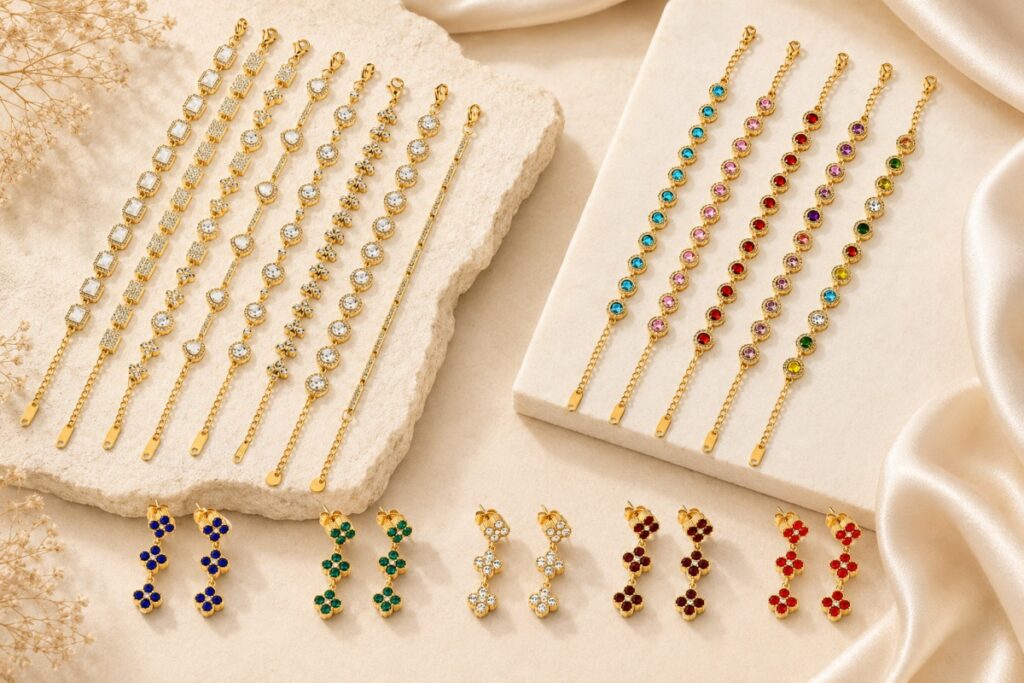
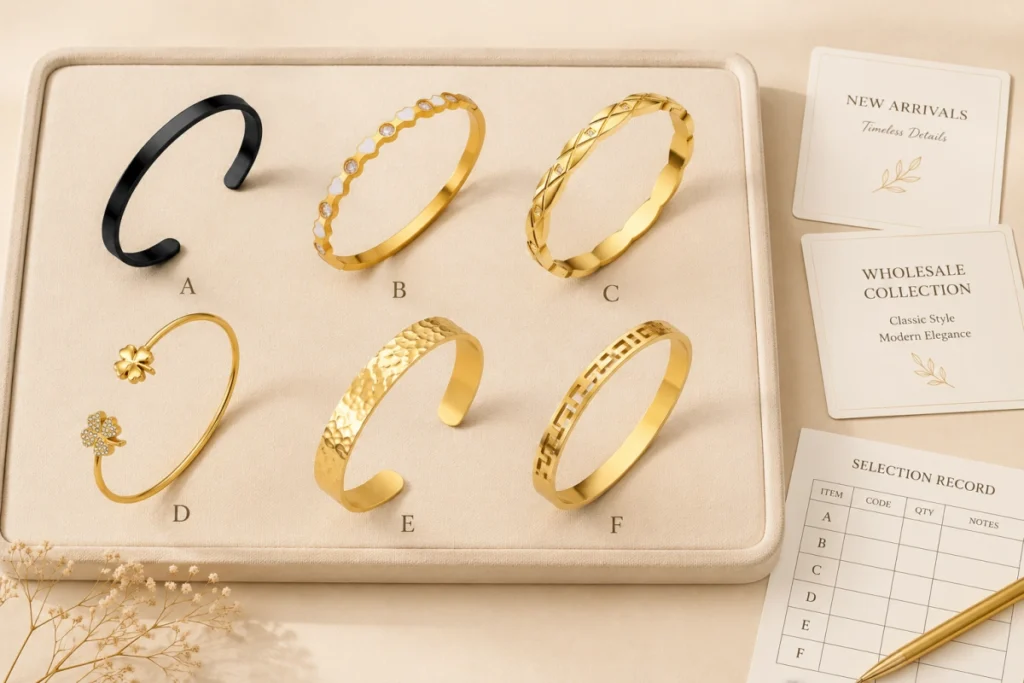
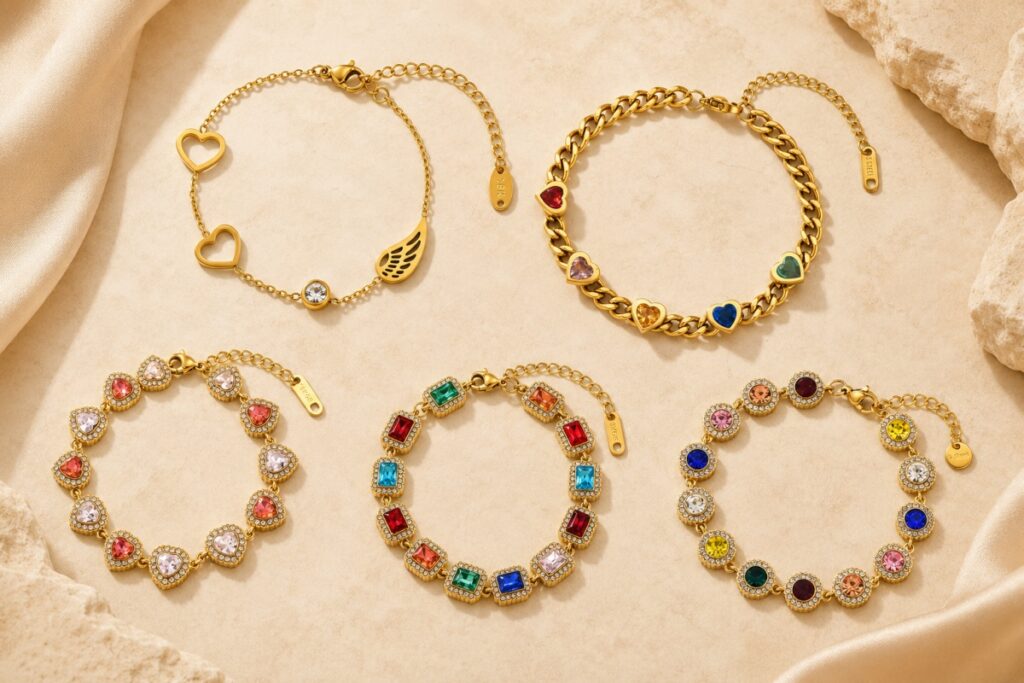
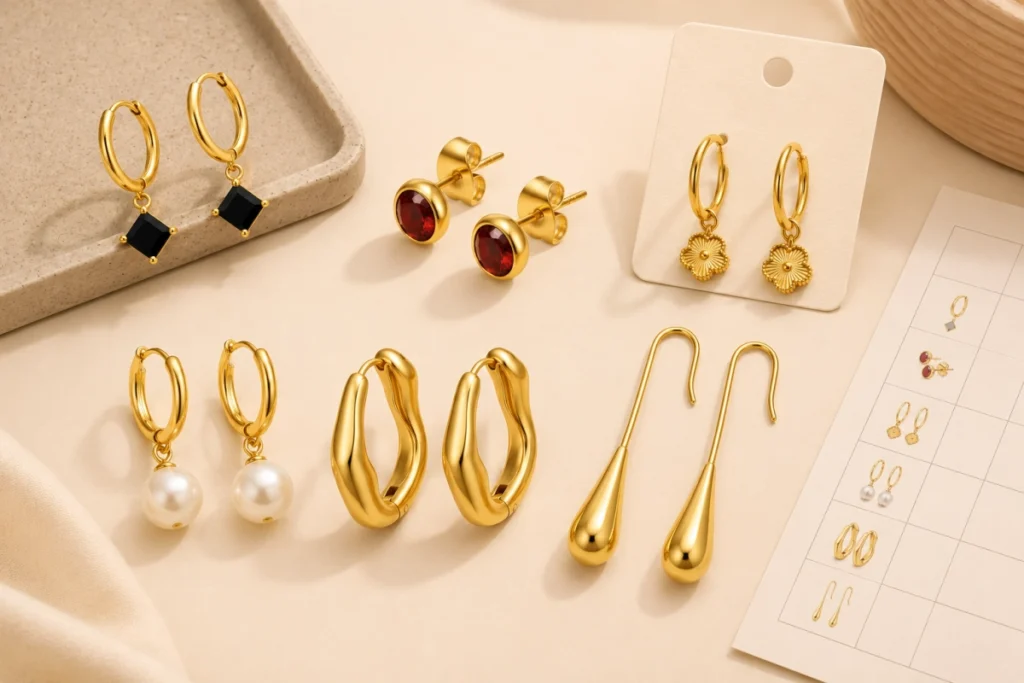
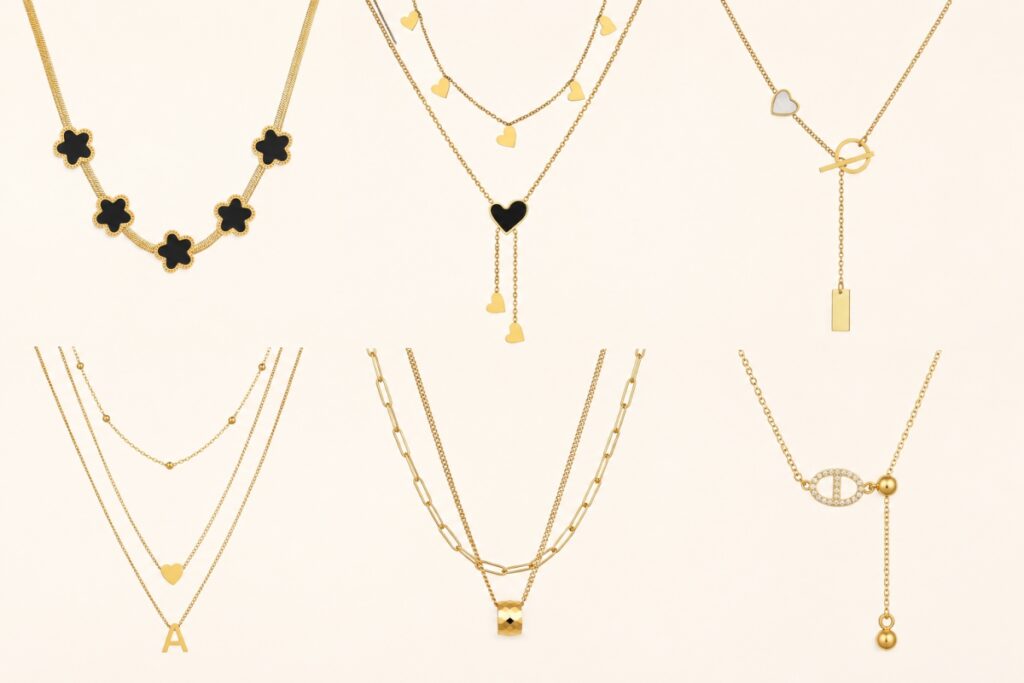
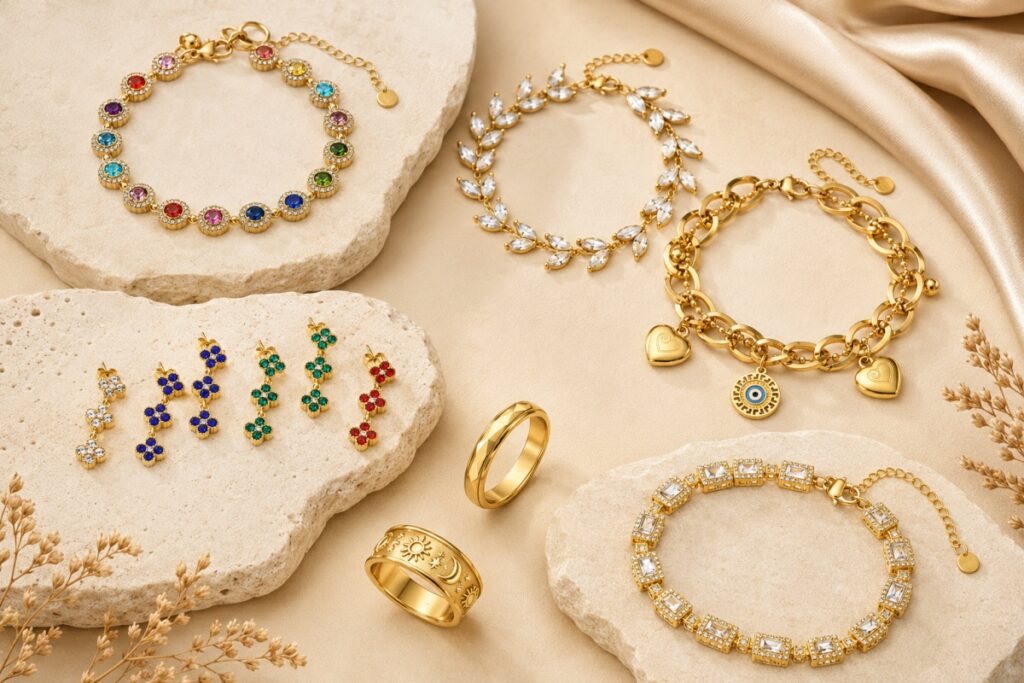
A wholesale stainless steel jewelry assortment should be planned as a complete retail collection rather than a group of unrelated products. Jewelry brands, wholesalers, boutiques and online retailers need to coordinate product categories, design directions, plating colors, sizes, quality standards, packaging and replenishment requirements.
A well-structured assortment gives buyers a clearer product identity, improves visual consistency across sales channels and makes future purchasing decisions easier. Before confirming an order, buyers should define the role of each product and ensure that the complete collection matches the target customer and retail positioning.
What Is a Balanced Wholesale Jewelry Assortment?
A balanced jewelry assortment includes products that serve different merchandising functions while maintaining a consistent overall direction. Some products may form the foundation of the collection, while others add visual interest, seasonal relevance or a distinctive brand identity.
The assortment should be broad enough to provide meaningful customer choice but focused enough to remain recognizable as one collection.
Wholesale buyers should consider:
- The target customer and retail positioning
- The main jewelry categories
- Core, seasonal and signature styles
- Product dimensions and visual scale
- Plating colors and surface finishes
- Size and length allocation
- Packaging and display requirements
- Quality standards and replenishment needs
Start with the Target Customer and Retail Positioning
Product selection should begin with a clear understanding of the intended customer. A collection designed for minimalist everyday wear will require a different assortment from one focused on statement jewelry, gifting, personalized products or unisex accessories.
Before selecting products, buyers should define:
- The preferred design direction
- The customer age group and lifestyle
- The expected retail positioning
- The main sales channels
- The preferred product weight and visual scale
- The required plating colors
- Whether personalization or private label packaging is needed
This information allows the buyer and supplier to evaluate products against one consistent collection strategy.
Balance the Main Jewelry Categories
Different jewelry categories perform different roles within a retail collection. The right category balance depends on the brand concept, customer preferences and sales channel.
| Product Category | Role in the Assortment | Main Considerations |
|---|---|---|
| Necklaces | Focal products, layering pieces and pendant-based designs | Chain type, length, pendant size, clasp and weight |
| Bracelets | Everyday products, stacking styles and coordinated sets | Length, adjustability, clasp, chain structure and comfort |
| Rings | Size-based products, stacking options and statement styles | Size allocation, band width, stone setting and surface finish |
| Bangles | Structured products, engravable styles and collection highlights | Inner dimensions, opening, closure, thickness and engraving area |
| Earrings | Coordinating accessories and complementary collection pieces | Weight, size, post, backing, closure and decorative components |
Buyers can explore Inoxara’s existing selections of stainless steel necklaces, stainless steel bracelets, stainless steel rings, stainless steel bangles and stainless steel earrings when preparing a coordinated assortment.
Define Core, Seasonal and Signature Styles
Products can be organized according to the role they play within the collection. This helps prevent the assortment from becoming too dependent on one design direction.
Core Styles
Core styles form the stable foundation of the assortment. They normally include versatile products that can remain relevant across different seasons and coordinate easily with other jewelry.
Examples may include:
- Simple chain necklaces
- Minimalist pendant necklaces
- Classic chain bracelets
- Plain or textured band rings
- Polished open cuff bangles
- Basic hoop or huggie earrings
Seasonal Styles
Seasonal styles can introduce current colors, motifs or design details while remaining connected to the main collection. These products may reflect gifting periods, seasonal launches or specific merchandising themes.
Signature Styles
Signature products help make a collection more recognizable. They may include a distinctive pendant, engraved bangle, coordinated charm series, custom logo component or unique surface treatment.
For private label collections, signature styles can be developed gradually through custom dimensions, engraving, logo tags, plating colors or OEM/ODM product development.
Coordinate Design Language Across the Collection
A balanced assortment should share recognizable visual characteristics. Products do not need to look identical, but they should feel compatible when displayed together.
Design consistency may come from:
- Similar link or chain structures
- Repeated geometric shapes
- Coordinated pendant and charm motifs
- Consistent crystal or stone colors
- Matching polished or brushed finishes
- Related product proportions
- A defined minimalist, classic or statement direction
For example, a collection built around clean geometric shapes may combine rectangular pendants, line-detail bangles, structured rings and matching earrings. A personalized collection may use engravable pendants, open cuff bangles and logo charms with consistent surface finishing.
Plan Plating Colors and Surface Finishes
Plating color has a strong effect on how products appear as a collection. Gold, silver, rose gold and black finishes can serve different retail markets, but too many unrelated finishes may weaken the assortment’s visual identity.
Buyers should confirm:
- The primary plating color
- Whether a secondary color is needed
- The approved color reference
- Whether products should be polished or brushed
- Whether all categories require the same finish
- How color quantities will be allocated
Products sharing the same plating color should be evaluated for batch consistency. Our own factory team checks plating color and surface appearance before shipment according to the confirmed order requirements.
Consider Product Scale, Weight and Wearability
Visual scale is another important part of assortment planning. If every product is extremely delicate or every product is oversized, the collection may not provide enough variety for different customer preferences.
A coordinated assortment may include:
- Delicate everyday products
- Medium-scale core styles
- Selected statement products
- Layering necklaces of different lengths
- Rings with different band widths
- Bracelets and bangles with different structures
Weight and wearability should also be considered, especially for earrings, chunky chains, wide bangles and statement rings. Product dimensions should be reviewed before confirming the final assortment.
Plan Sizes, Lengths and Product Variations
Wholesale jewelry assortment planning should include the allocation of sizes, lengths and product variations. This is particularly important for rings, bracelets, bangles and necklaces.
Buyers should prepare:
- Ring size allocation
- Bracelet length requirements
- Bangle dimensions and opening requirements
- Necklace chain lengths
- Color allocation for each SKU
- Quantity allocation for each product variation
A clear breakdown helps the factory prepare products correctly and reduces errors during inspection, packaging and shipment.
Create Coordinated Products and Collection Sets
Coordinated products can help buyers present the assortment more clearly. A necklace, bracelet, ring or bangle may share the same motif, finish or design detail without being sold as a fixed set.
Possible coordination methods include:
- Matching necklace and bracelet chain structures
- Repeated heart, star, flower or geometric motifs
- Coordinated crystal colors
- Matching ring and bangle surface patterns
- Consistent logo tags or brand charms
- Unified jewelry cards and packaging
Collection coordination can improve product presentation across catalogs, retail displays, online stores and brand photography.
Ready-Stock Selection or Custom Collection Development?
The appropriate sourcing route depends on the amount of product development required.
| Order Route | Suitable For | Main Planning Requirements |
|---|---|---|
| Ready-stock selection | Building an assortment from existing products | Product availability, colors, sizes, SKU allocation and packaging |
| Ready-stock with branding | Adding logo tags, engraving or branded packaging | Artwork, branding position, packaging and processing requirements |
| Product adjustment | Changing dimensions, chain length, finish or selected details | Technical feasibility, sample confirmation and production planning |
| OEM/ODM development | Creating new designs or a coordinated private label collection | Design files, material, tooling, samples, quality standards and bulk production |
Buyers can review our existing stainless steel jewelry products or learn more about our OEM/ODM jewelry manufacturing services for projects requiring broader customization.
Establish Consistent Quality Standards
A collection should maintain consistent quality across different product categories. Even when products use different structures, buyers should confirm common inspection standards before shipment.
Quality checks may include:
- Material and product specifications
- Dimensions and size allocation
- Polishing and surface appearance
- Plating color consistency
- Clasp and closure function
- Welding and connection points
- Stone or decorative component placement
- Logo and engraving accuracy
- Quantity and packaging details
Samples should be reviewed when a collection includes custom products, special plating, logo details or private label packaging. Buyers can use our jewelry sample inspection checklist to record approved product standards.
Plan Packaging as Part of the Assortment
Packaging should support the collection’s retail positioning and protect each product during transportation. Different jewelry categories may require different card dimensions, inserts, pouches or boxes.
Private label packaging options may include:
- Logo jewelry cards
- Printed protective bags
- Jewelry pouches
- Branded gift boxes
- Barcode and SKU labels
- Care and product information cards
Packaging dimensions, logo artwork, materials, colors and label information should be confirmed before production. Learn more about our private label jewelry packaging services.
Plan for Reorders and Collection Continuity
Assortment planning should also consider future reorders. Buyers should identify which products form the long-term foundation of the collection and which products may be updated according to seasonal or merchandising requirements.
Useful information to maintain includes:
- Product SKU and reference images
- Approved material and dimensions
- Plating color reference
- Size and length allocation
- Packaging specifications
- Logo and artwork files
- Previous inspection records
Accurate product records make future communication more efficient and help maintain consistency between production batches.
How to Prepare a Wholesale Jewelry Assortment Inquiry
To receive an accurate product and production evaluation, buyers should provide:
- Selected product links, SKUs or reference images
- Required quantity for each product
- Color and size allocation
- Target customer and retail positioning
- Preferred material and plating finish
- Logo or engraving requirements
- Packaging and labeling requirements
- Target delivery country or region
- Expected production or launch schedule
Our factory team can then review product availability, assortment compatibility, customization feasibility, production requirements and packaging details.
Build Your Stainless Steel Jewelry Assortment with Inoxara
Inoxara has its own stainless steel jewelry factory, supporting ready-stock wholesale, sample development, OEM/ODM manufacturing, custom plating, engraving and optional private label packaging.
Jewelry brands, wholesalers, boutiques and online retailers can select existing products or discuss a coordinated collection based on their product positioning, quality requirements and sales channels.
Send us your selected products, expected quantities, colors, sizes and packaging requirements. Our factory team will review the complete assortment and confirm the suitable supply or production solution.